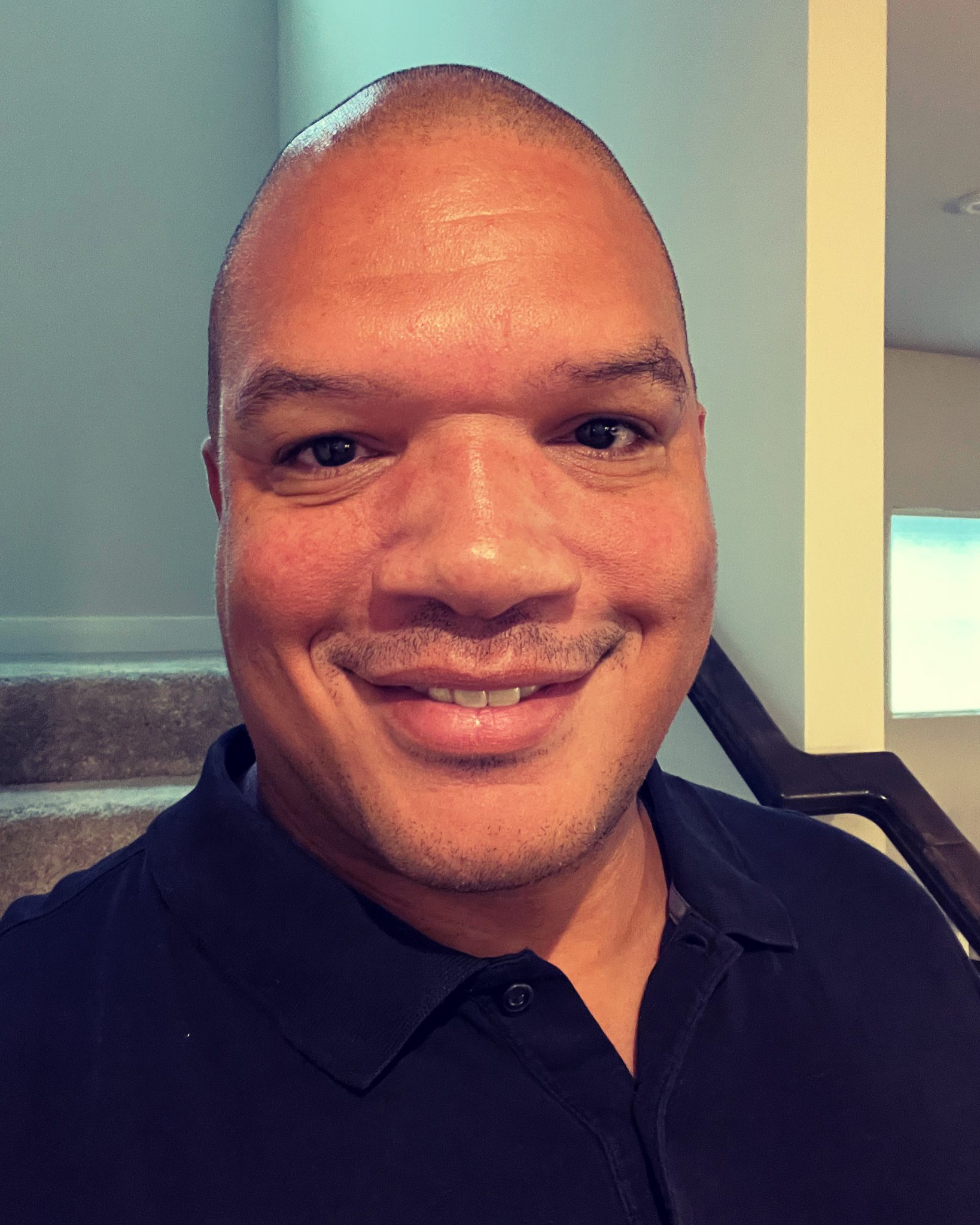


From Fear to Trust: Creating Better Experiences through Vulnerability


The Power of Vulnerability
A year ago, I made a choice that changed me: I decided to trust more. Trust my intuition, trust my team, and trust the journey I’m on — to trust the vision, even when the path in front of me was maddeningly unclear, dizzyingly unstable. That choice—to move from fear to trust—transformed me personally. Even more, it reshaped how I connect, lead, and create better human experiences with and for others, by rooting these experiences in more trust, genuineness, and belonging.
This choice was actually the culmination of a series of progressive acts of intentional vulnerability for me—choosing to make myself vulnerable when my previous history of fear-based decision-making wanted me to stay closed off, to not admit I needed help, to not seek input. That so-called self-protection wasn’t protecting me at all. Or at least, it wasn’t enabling me to grow. I had to get vulnerable to grow. I’m not talking about the kind of vulnerability defined as exposure to harm or attack by others. But I am talking about the kind of vulnerability that shows openness and trust. I had to get uncomfortable with my fear, my failure, my mistakes, and my limitations, so I could finally thrive—and help others thrive, too.
Now, let’s not romanticize it. Trusting more wasn’t easy for me because trusting others had been trained out of me. As I’ve shared previously, between a combination of childhood traumas, disappointment at the hands of those I thought I could count on, adolescent mistakes, and adult failures, I developed an illogical belief that the only one I could trust, the only one I could depend on, was me. This belief was fed by—and in turn fed—fears of further failure, of being judged, of not being enough.
Something had to change.
I had to overcome those fears, because carrying them alone was exhausting. I began to realize that the walls I’d built for protection were also keeping me from growth. I had to let go of the illusion of control, the idea that I could carry it all by myself. I had to face a difficult truth: my fear of trusting others was limiting not only me but also the people I was meant to lead and the experiences I was meant to create. This also gave me the opportunity to realize that while vulnerability doesn’t guarantee success, it does open the door for genuine connection and growth.
A little over a year ago, this meant really facing the truth that I could do very little on my own, and that “we” could do so much more together. I remember the moments of profound doubt, staring at numbers that told a story I didn’t want to believe—one of potential failure. I was absorbed in the decisions we’d made—I’d made—to pivot Share More Stories, and wondering if I’d just moved us closer to the end. Oh sure, I believed the hype (self-given and others), that I was always a great team leader, a great collaborator. And in many cases, those assessments were true. But when the rubber met the road, I trusted myself above anyone else. And that had to stop.
So, I made a choice. I chose to acknowledge my mistakes. I chose to believe that we were on the right path, and that it was a matter of time. And I chose to trust and believe the teammates who’d poured so much into this work, who also believed in what we were doing. They were looking to me, and when I expressed fear and doubt, I could see it ripple through the team. On the contrary, when I expressed faith and confidence—even when I didn’t feel it but chose to believe it—I saw them get excited. Instead of retreating into fear, I shared even more of my story, and I shared the journey with them. And I continue to share the lessons I am learning and how I intend to grow because that keeps me honest. That activates more trust. Vulnerability activates more trust. It invites trust. And it becomes a strength that drives our connection.
Even more recently, as we navigated one of the many challenges of building a business, I focused on responses and actions that are intentionally vulnerable and transparent, so I can place myself in a position of trusting others more and, therefore, invite others to trust me. This is not because I think I’m weak, and it’s not a game I’m playing, either. It’s hard for me to do, but I do it because I’m learning that vulnerability leads to trust, and that leads to connection, and that leads to better experiences for our team—as well as better experiences for our customers.
Lessons from Mistakes: Building Trust
Look, I get it. It’s not easy to talk about mistakes and failure, but I’ve found it to be part of my practice of vulnerability.
It didn’t happen overnight, but for me, writing about them, reflecting on them, sharing them, and using them to highlight shared humanities, shared experiences, and shared challenges—all of that made me who I am today.
And I’ve made more than my share of mistakes. Big ones. Huge.
I didn’t take college seriously and it cost me.
I lost my job and had to restart my career.
I was selfish and not the person my family needed me to be.
And despite the fact that these failures and mistakes were absolutely mine, for years I was resentful of seeing others get second chances where I didn’t. I thought I deserved opportunities to not have my mistakes define me so fully, so finally. But resentment kept me trapped. It wasn’t until I inspected my own story, and reframed my narrative from fear and resentment to honesty, accountability, and vulnerability, that I could move forward.
Practicing gratitude helped me reframe setbacks, like times when I would say to myself and the universe, “Well, at least I got to learn this lesson now, vs. later on when we’re bigger, and the stakes are much greater.” Acknowledging my fears and realizing they were often exaggerated versions of reality also helped. And naming failures and mistakes, vs. trying to pretend they were something else, helped as well. This mindset shift transformed how I approached leadership—not as a quest for perfection but as a journey of learning and growth.
But honestly, even after I began to let go of resentment, I still felt the weight of those failures. The weight was fear. I was still afraid of being found out, or of being judged.
But here’s the truth: most of my failures and mistakes, guess what? People knew. People saw. Even if they didn’t know it all, they knew enough. And the people who cared about me, they always saw past my failures and mistakes.
And as for my fear of judgment? Well, yeah, some people did judge me. But many, many more did not. They gave me second chances when I needed them. They gave me grace. They forgave me and allowed me to forgive myself.
And you know what? I may quite literally be a life-long learner, but I gained a lot from my time at Princeton and Columbia (and a couple of other stops along the way), plus TONS of real-world education. And I’m almost finally fine with that. 😃
I did start my career over—in my 40s!—thanks to the support of family, friends, partners, and teammates.
And after a lot of work, I now have much healthier relationships with my spouse, my kids, my in-laws, and my ex-spouse, too.
Our mistakes don’t define us. Our willingness to grow from them does.
As painful as they are, mistakes, when shared, can accelerate trust-building and fostering healthy vulnerability. When I chose to share my failures, something profound happened. Instead of diminishing my credibility, my openness strengthened my relationships. Some might say, “Don’t give your failures so much attention.” But in my experience, by admitting what went wrong and what I learned, I not only got over things,I gave others permission to do the same. Trust deepened because I showed I wasn’t perfect—I was human. And when I did this publicly, through shared stories about these experiences, I shined light in people’s darkness, even as I invited others in. Every time I’ve shared a deeply personal story, especially one about the challenges I endured, or the mistakes I made, or the failures I’d experienced, people have written to me to say “Thank you.” Every time. To say how much they appreciated my vulnerability. To say it made them reflect and think. And to let me know I inspired them.
See, when leaders share their mistakes, they send a powerful message: perfection isn’t the goal. Progress is. Growth is. And in this context, intentional, healthy vulnerability becomes a bridge, allowing others to step into conversations honestly and without fear of judgment. I’ve seen this in action time and again. Teams become more cohesive. Customers feel heard. Stakeholders align around shared values because they trust the leader guiding them. On a personal level, I’ve seen team members grow in confidence as they tackled business and organizational problems with the knowledge that I trusted them, that I believed in them, and that even if their decisions didn’t work out, we’d face the results and any potential problems together.
Trust and vulnerability are practice-dependent. They require consistent action, honest communication, and the willingness to acknowledge and learn from mistakes and failures. When we as leaders demonstrate this, we create ripples in the organization, in the marketplace and in society. Teams innovate without fear of failure. Customers and stakeholders tune into the values of the brand. Relationships deepen, and the organization thrives—not just in the outputs we incessantly measure, but also in the emotional drivers and outcomes that underpin those activities and behaviors.
The Human Experience: Connection vs. Relationship
A lot of this comes down to connection and relationship. And as I’ve explored this topic, I’ve started to realize that while connection and relationship are definitely related, there are some subtle yet important distinctions. When I think of connection, I think of that feeling of knowing we have somehow shared something important, or rewarding, or meaningful or deep. It’s about that moment when someone sees you fully, accepts you wholly, and meets you where you are, even if it’s for a brief moment. I don’t necessarily assume that means we have a relationship, and therefore I see the relationship as something deeper.
On the other hand, I sometimes see relationships as coming with greater expectations, even burdens, that sometimes cause us to pull away from one another, devolving into transactional behavior.
I think healthy connections and relationships both depend on trust in a way that transcends transactions. Even more, I believe connection serves as a bridge between vulnerability and belonging.
Paradoxically, I believe there are only so many relationships we can cultivate and nurture well at any one time, and that perhaps the problem with some of our relationships is that we’re trying to have too many. I believe that I can at least connect on at least some level, in ways across varying relationship structures with people I barely know, when we find we have a shared belief, shared value, or shared experience.
So I seek to strengthen relationships with people through intentional connection, and I also seek to create connections on different levels with more people as well.
In this way, I think it’s less about connection OR relationship, but rather, what kind of connection do we seek, and what kind of relationship are we in, or do we aspire to be in? And what types of experiences will drive those things?
Think about it: how often do we mistake connection for relationship, and vice versa? How often do we hold onto surface-level interactions, convincing ourselves they’re enough? How often do we hold onto old relationships, believing we somehow still have the same level of connection we once did, even though we’ve put in very little effort of late?
In our work through the SEEQ Platform, I’ve witnessed time and again how these moments of connection fuel better experiences—for employees, customers, and leaders alike. Connection isn’t built on transactions but on authenticity and trust.
Connection, I’ve realized, enables what the limitations of time and energy cannot. We can’t have deep relationships with everyone we meet, but we can spread connection energy—an openness, a willingness to engage, a sense of curiosity about one another’s stories. Being super deliberate about my relationships and connections isn’t some way of avoiding, withdrawing from the world, or keeping people out. On the contrary, this enables me to identify ways to engage the world more intentionally, choosing depth when and where it matters most. Our current environment and climate—socially, technologically, ideologically, and politically—seem hellbent on not only driving us further and further apart, but also reducing me to something less than a connected human being, to an isolated individual believing that I can survive through radical independence, rather than a collective interdependence.
So my vulnerability, in this way, becomes my resistance to these forces of division and reduction—a deliberate act of countering fear and isolation with openness, humility, and humanity.
I find that this posture enables me to confront more of the things in me, in the people I interact with, and in the systems that I operate in, that do need to be improved and changed, with a spirit of grace and positive intention. Accountability in me and accountability in others, therefore, is enhanced through vulnerability, connection, and trust.
The Role of Stories in Bridging Fear and Trust
Now look, you already know how we feel about stories. I mean, it’s in our company name – Share More Stories – and in case you didn’t know, it’s also in the name of the SEEQ Platform. That’s right, SEEQ stands for Stories to Engage, Explore and Question. So that’s what we’re constantly doing with and for our customers, right? We’re using stories to connect and learn in a deeper way.
At Share More Stories, we’ve seen how stories act as a bridge—connecting emotions, experiences, and intentions in ways that no spreadsheet or presentation ever could. They expose the fears, aspirations, and motivations that drive human behavior. When leaders listen to the stories of their employees, customers, and stakeholders, they begin to understand not just what’s working but why it’s working—or not. Stories reveal the “why” behind shallow data like engagement scores or customer satisfaction metrics. They uncover the emotions and motivations that numbers alone can’t explain, offering leaders actionable insights for improving experiences that lead to meaningful change.
Imagine asking employees to share a story about a time they felt truly valued at work. Or inviting customers to describe their most memorable experience with your brand. These stories go beyond surface-level insights. They uncover truths that leaders need to hear to create meaningful change.
I’ve seen it happen. I’ve seen how a single story about loss and grief can connect people who previously thought they had nothing in common. One story can take down “us” and “them.” One story can change the trajectory of a team, a company, a life. One story about belonging can illuminate the gaps leaders didn’t even know existed. One story about exclusion can become the catalyst for meaningful change.
And as one of our SEEQ customers said recently, the act of inviting people to share their stories, listening to them, and learning from them is in fact an act of engagement. In that instance, business leaders were able to identify the emotional and logistical barriers preventing new employees from getting fully connected and engaged as quickly as possible. And they were able to immediately put those insights into action, creating a new hire employee engagement program that mitigated the challenges they’d uncovered, while building on the positive attributes of the experiences the stories revealed.
That’s because when leaders listen to stories, they don’t just gather data—they gather humanity. They build bridges of trust and create spaces where vulnerability is not a risk but an opportunity for connection.
Indeed, this is the heart of creating better experiences: listening deeply, learning intentionally, and acting courageously.
Stories also remind us of our shared humanity. They reiterate us. You read that right. They give us a chance to repeat our humanity. To emphasize our humanity. To reinforce our humanity. To take the journey together, again.
When we share our stories – especially our untold stories – we see that our fears and doubts are universal—and that trust and connection are possible even in the face of these challenges, whether those challenges are due to circumstances beyond our control, or the result of our own mistakes. This has been powerful and true in my life, as I reflected on the power of sharing my own Untold Story related to the holidays (and encouraged you to share yours, too); and as I came to realize that unburdening myself from those experiences allowed me to empty myself in the best possible way, so I could be refilled with what would heal me, serve me, and make me more useful.
When we share our stories, through vulnerability, we create space for others to share theirs, building a community rooted in alignment, transparency and forward movement.
So what if, as leaders, we took this one step further? What if your next team meeting started with you sharing your story of failure or mistakes made, and of overcoming those challenges through trust and vulnerability? What kind of culture might you inspire? What kind of relationships AND connections might you inspire and encourage? What deeper wave of shared belief might rippled across the surface of your organization and brand? And then what might those employees, now feeling deeply connected to the team, to the organization, and to you, do when they return to their jobs? I like to imagine them feeling like they can tackle anything, because they are part of a group that trusts, and because failure isn’t automatically the end of the road for them.
What if you did this with your customers? Or even your community?
Why Leaders Must Choose Humanity
I believe we are on the cusp of great change in our communities, in our society, in our workplaces and in business. The question I’m asking is, “What kind of leaders will we choose to be in this time of transition?” Will we only build walls to protect ourselves, or will we also build bridges to connect with others?
This is not a “gloom and doom” take. Honestly, I don’t think the sky is falling or that everything is coming to an end. But I do believe we’re at a proverbial crossroads of conscience (and consciousness). We have choices to make, and that’s what leadership is all about, right?
Every day, leaders decide how they will show up—for their teams, their customers, their stakeholders, and themselves. Will they lead with fear and isolation, guarding themselves against vulnerability and connection? Or will they lead with trust, choosing courage over caution and connection over control?
Across the board, humanity’s progress depends on leaders willing to trust their teams, embrace the messy, imperfect journey of vulnerability, and prioritize belonging. These are the kind of leaders who inspire me—and who inspire the teams they lead. They acknowledge their fears but refuse to be ruled by them. They choose humanity in a world that too often rewards division and isolation.
This isn’t about being soft or weak. It’s about staying (or becoming) genuine. It’s about understanding that the greatest strength lies in our ability to connect, to trust, and to build spaces of belonging, together. And yes, it’s hard. There will always be people who want to weaponize my vulnerability or yours, who want to take advantage of our trust. But the alternative—leading from fear and isolation—only creates more of the disconnection we need to heal.
Yes, there will be times we need to practice discernment and have boundaries. And when practicing discernment in vulnerability, it doesn’t mean we have to close ourselves off; it means choosing when and how to share ourselves in the world, in ways that build trust.
Because the truth is, we can’t let the fear paralyze us. We can’t let fear of the few stop us from doing good, from being open, from building trust. We have to cross the chasm, even when the familiarity of fear beckons us, even when retribution feels deserved. I believe this is essential for the human experience.
As I reflected on last year, I saw how choosing to trust more transformed my leadership, my relationships, and my life overall. It’s given me confidence balanced with humility (something I’ve aspired to for years). It’s given me clarity of the present balanced with hope for the future (which is a manifestation of sorts, of my calling for people to experience hope and revelation with me). It’s fueled my ongoing growth in vulnerability. And as we move through 2025 and beyond, I’m convinced that trust will be the foundation for the better experiences we all seek to have and create.
A Call to Action: Leadership Through Listening
So, here’s my challenge to you: How can you lead with trust today? What would it look like to listen deeply—not just to what’s said but to what’s left unsaid? What could you learn from the stories of your employees, your customers, and your community? How could you seek out the voices and stories from those you don’t hear from very often? And how might those insights transform the experiences you create with and for them?
At Share More Stories, we’ve built the SEEQ Platform on the belief that storytelling isn’t just a tool—it’s a necessity. Through stories, we uncover the “why” behind human behavior, helping leaders take actionable steps toward better experiences, through greater connection and belonging. When you’re ready to take that first step, let’s talk. Here’s my Calendly: https://calendly.com/james-sms/30min
A Shared Vision for Belonging
In a world full of uncertainty, where negatively dominates narratives in ways it does not deserve to, one thing is clear: trust changes everything. For me, it has changed the way I lead, the way I live, and the way I create space for others to thrive. And in many of our customers, I’ve seen the way it transforms teams, builds connections, and creates better experiences for customers and communities, and I’m excited to help more leaders choose trust over fear, connection over isolation, and belonging over exclusion.
This year, let’s lead with trust, listen with intent, and act with courage.
Let’s create experiences that unite rather than divide. Experiences that enable people to feel seen, understood, and valued.
And more than anything, let’s create experiences that enable people to feel deeply and truly connected.